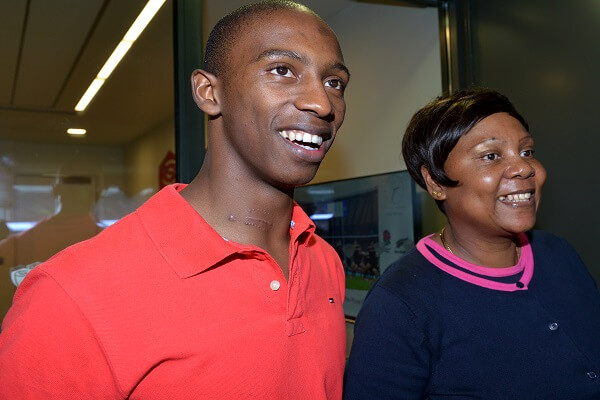

Photos courtesy of Mid Sussex Triathlon, Chill Swim and Leo Wilkinson
Not many people mark their 50th birthday with a 6am three-mile swim. That’s how committed Barry Davids from Worthing, West Sussex, is to raising money for the RFU Injured Players Foundation (IPF).
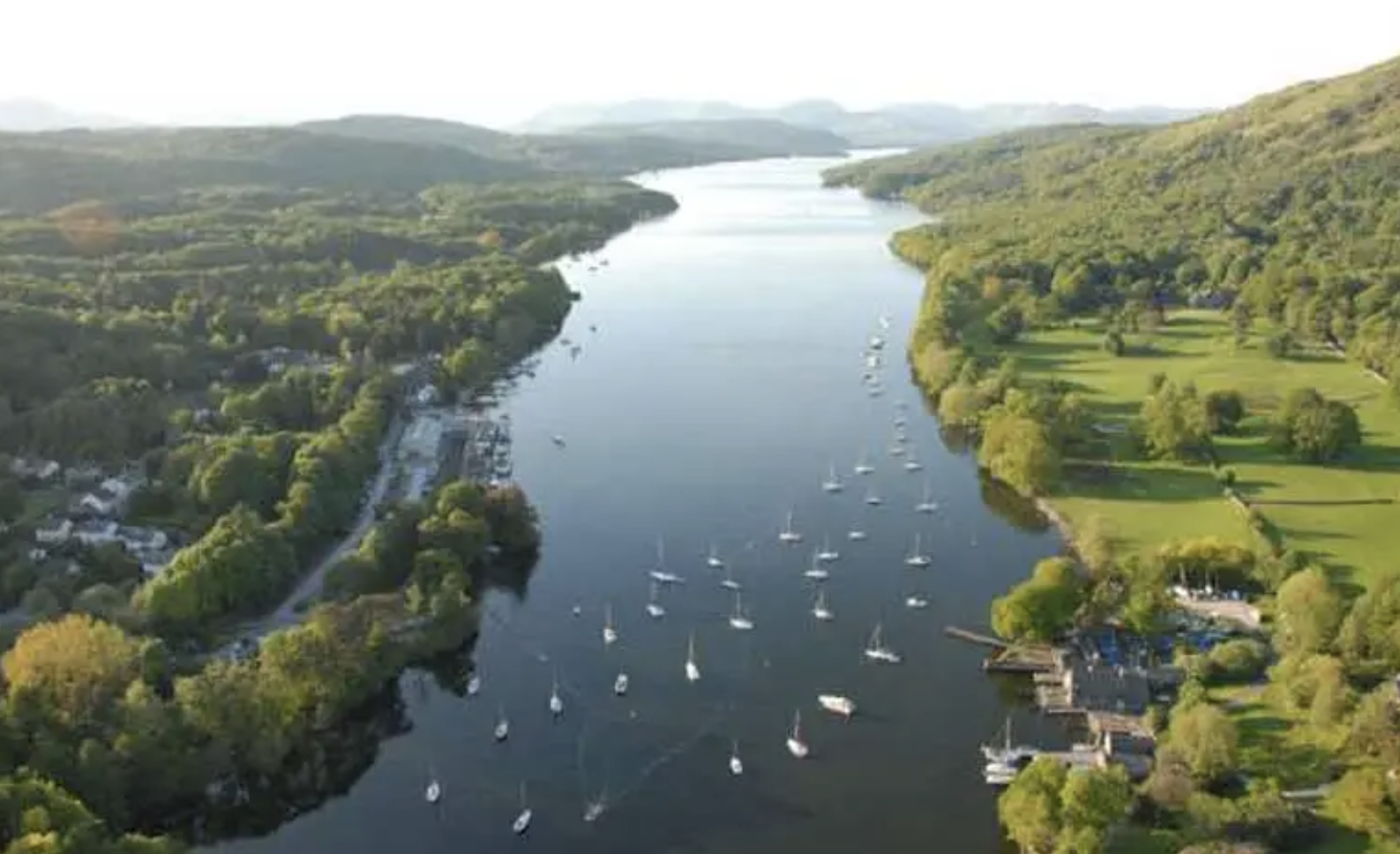
In September, Barry will take on the swim of his life. 11-miles (17.5km) across Lake Windermere is a taxing course at the best of times. Consider that Barry will be swimming with the use of only one arm, and the magnitude of the challenge becomes clearer.
You can support Barry’s fundraising challenge here
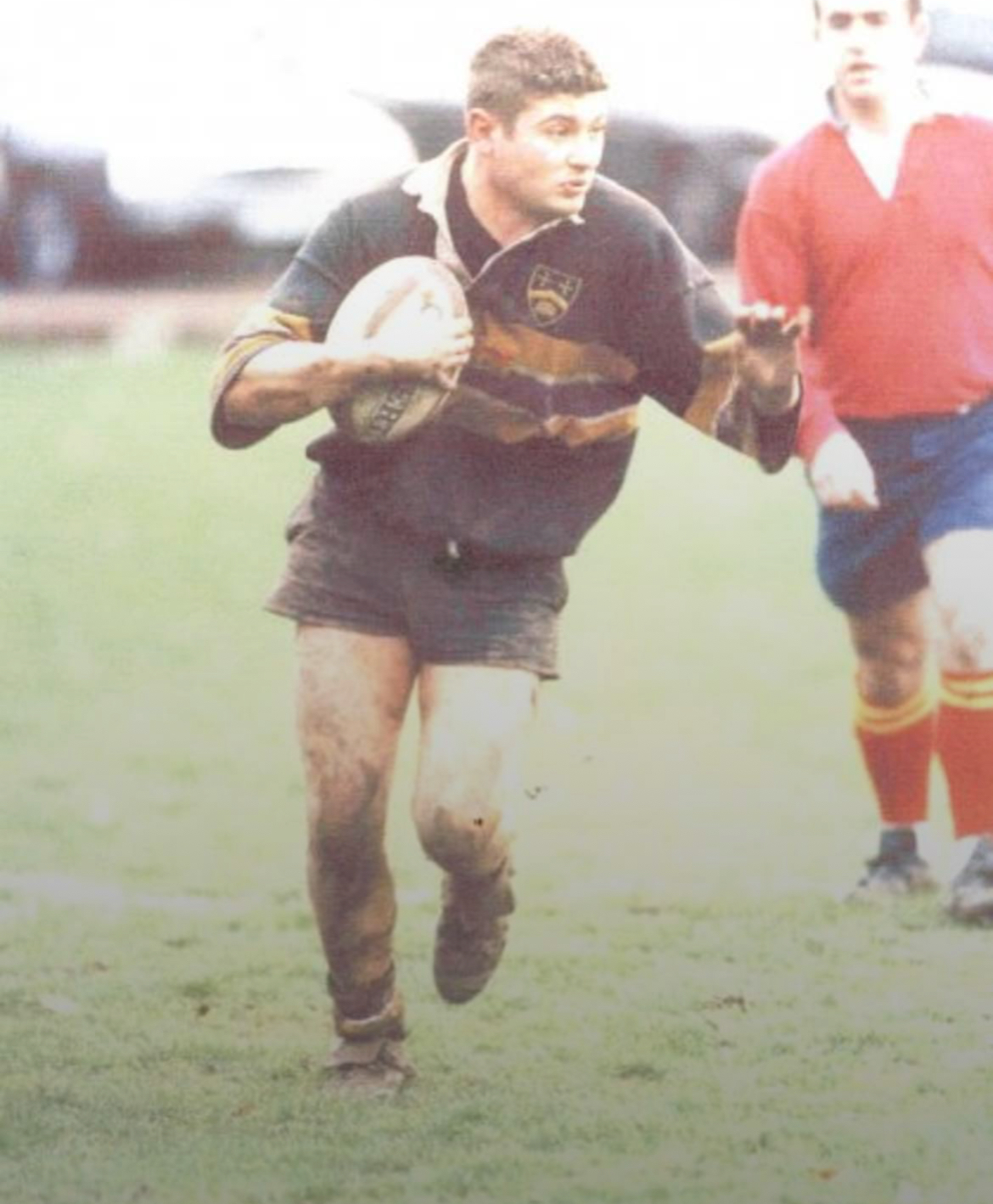
Barry, who lost the use of his right arm 26 years ago after sustaining a brachial plexus injury in a rugby tackle, explained:
“The swim is going to be monumentally hard. I think it should take around six hours. I chose the Chill Swim and Lake Windermere because it’s the longest lake swim you can do in England. 11 miles is considered an ultra-distance, and I’ve never swum that far before. To put it into context, a marathon swim is about six miles, so this is like asking a runner to hop on one leg for back-to-back marathons!
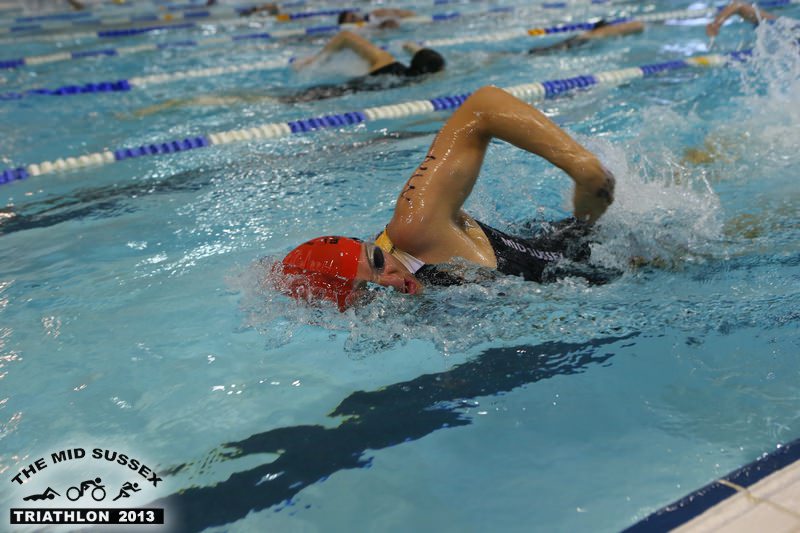
“I've had a fantastic response since announcing the challenge, and not just from friends and family. I've received good luck messages and sponsorship from people I've never heard of and managed to hit my original £2,000 target in just over a week.
“I have a real urge to help others like me find the Injured Players Foundation. That is as strong a pull as raising the money for me. I think I would have really benefited from the kind of support the IPF provides for players now if I’d had had access to that back in the early days after my injury.”
The IPF is an official charity of England Rugby and supports players at any level of the game who have sustained a life-changing injury while playing rugby union in England.
While thankfully extremely rare, these are incidents which result in the loss of, or loss of use of a limb, a catastrophic spinal cord injury or an acute severe traumatic brain injury which results in permanent functional disability. The IPF also funds vital research to improve injury management and to reduce the risk of injury occurring in the game.
“It’s so important to raise awareness of the IPF,” Barry continues, “so that players in similar situations know support is available. Research shows only about half the rugby community knows the IPF exits, and that’s why the charity is working so hard to raise their profile to make sure players don’t struggle alone.
“I only found out about the IPF by accident. My injury occurred back in 2000 before the IPF was launched. There wasn’t the same infrastructure then, so injured players sometimes received match tickets but there wasn’t the same level of financial, physical and emotional support as there is today.
“The IPF came into existence in 2008 and over the years they have been able to extend their support and reach more of the rugby family.
“I found out about the IPF when I was applying for a disabled car parking pass at the Allianz Stadium for my dad and mentioned I also had a disability following a rugby injury. The team at the stadium were brilliant and were happy to pass on my details to the Injured Players Foundation.
“IPF Welfare Officer John Burgess was immediately on the phone, checking I was ok and explaining support they could offer.
“I’m not sure I can put into words how amazing it felt to get John’s call. He was so caring and I suddenly felt supported. The impact that had surprised me as I’d never felt like I needed that support before.
“It was so reassuring to discover the IPF existed. They invited me to a match at the Allianz Stadium to meet other IPF beneficiaries and it was a seminal moment for me.
“Almost overnight I felt less lonely about my injury. As humans, I think we crave like-minded communities. I don’t particularly need anything material from the foundation. Just knowing I’m part of it, and that I can meet others with similar experiences, is a huge comfort to me."
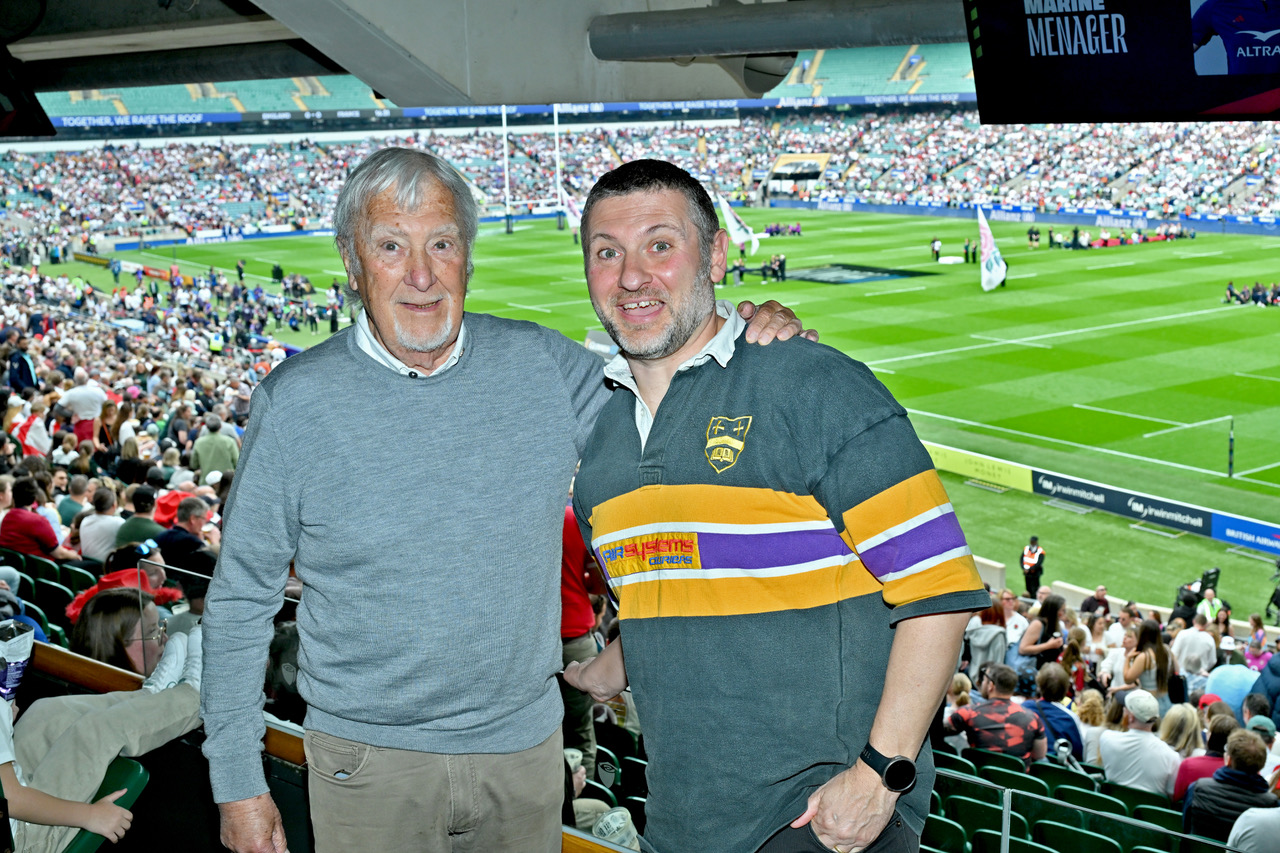
“When I was watching the Red Roses in the IPF box, it was the first time in 25 years that I'd met another seriously injured rugby player. That probably shows how uncommon life-changing injuries are. We had some really good chats and shared similar experiences. It immediately felt like we understood each other, which isn’t as easy with people who haven’t gone through the same emotions.”
Barry is quick to recognise the support he has received from the rugby family over the years, particularly from his former club.
“My club Old Caterhamiams were brilliant,” he said. “At a point not long after my injury when I was feeling quite low, they put me on the back of a tandem in a charity bike ride across California to keep me part of the team, as they helped raise money for me. They also organised a fundraising fixture in which professional players like Jeff Probyn played. It shows the rugby family ethos.
“I still love the game. I don't regret playing rugby at all. One of the things I've always loved about rugby is it’s a game for all builds; bigger, smaller, faster, slower, whatever you are. There’s a real unity in the team.
“I did have a few years where I struggled to watch rugby, especially at a level that I knew I could have been playing in, but I always enjoyed watching internationals as it was above my capability.
“I’m really loving getting to see international matches again. I went to all the autumn Tests and can’t wait for the Six Nations!
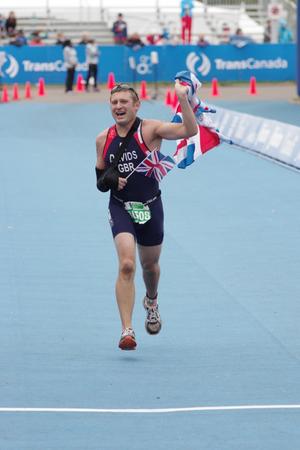
Barry, who volunteers as a triathlon coach around his full-time job as a systems analyst, has never let paralysis in one arm prevent him from living the life he wants to lead.
From learning to drive a motorbike and enjoying track days at Brands Hatch, to playing the drums and representing GB in the Triathlon World Championships in Edmonton, Canada, he has focussed on getting on with life.
“The Triathlon World Champs was one of my proudest achievements,” said Barry. “I was actually trying to qualify for the GB Para Triathlon team and entered a regular triathlon near Rutland Water. I did well enough in that to qualify for the GB age group team for able-bodied participants.
“That was incredible. It scratched an itch for me. You spend a lot of time after injuring yourself questioning what you can and can't do. I think I proved to myself when I got there that I could still do what I wanted to do. I wasn't far off making the Rio 2014 Paralympic team, but I fell short in the end. At least I know I gave it my best shot!
“Back when I first injured myself, I questioned what life would be like and all sorts of things, like would I ever have a girlfriend. Now I have a wife, kids and a grandchild, and the future is bright. Ultimately, life hasn’t changed.
“It actually opens up opportunities, in a different way. I think it makes you more resilient as a person because you just learn to adapt to everything. If you want to do it, just do it, that’s what I say, and when you try you realise everyone else is really welcoming and supportive of what you want to do.
“I’ve loved being part of the Triathlon community, formerly with Mid Sussex and now with Tuff Fitty, as much as I do the rugby community. Hopefully both worlds will support me in this challenge as the training heats up and September’s swim approaches.”
You can support Barry’s fundraising challenge here
For more information on the IPF visit www.RFUIPF.org.uk